Why the Global Electric Vehicle Market Is Facing New Headwinds
Initial optimism for sustainable mobility has hit complex barriers. Discover the real factors stalling the global expansion of electric vehicles.
Nivagoo
Listen to this article
The current landscape of the EV market
The global electric vehicle (EV) market is currently navigating a period of significant recalibration. After years of explosive, seemingly unstoppable growth, the transition toward full fleet electrification has encountered a confluence of economic, logistical, and structural hurdles. Both legacy automakers and new market entrants are being forced to adjust their long-term strategies as consumer demand—while still trending upward—shows clear signs of cooling in key regions like North America and Europe.
Economic barriers and the battery cost conundrum
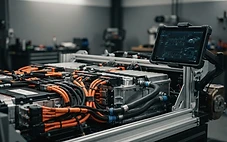
A critical inflection point for the industry is the challenge of economies of scale. Lithium-ion batteries, which account for the largest share of a vehicle's production cost, remain highly susceptible to global supply chain volatility. The extraction and refinement of essential minerals such as lithium, cobalt, and nickel have become flashpoints in international geopolitics. These supply constraints keep production costs elevated, making it difficult for manufacturers to price entry-level models competitively against their internal combustion engine counterparts.
Infrastructure and range: the consumer bottleneck
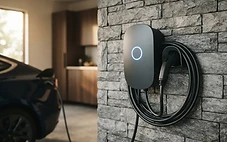
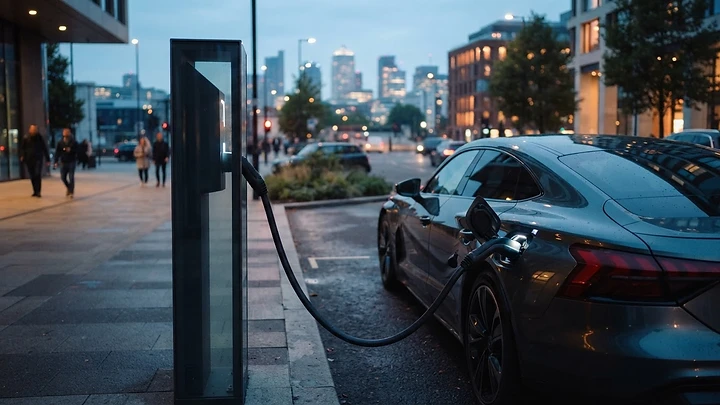
Beyond the sticker price, the average consumer remains wary of the day-to-day viability of ownership. The primary friction points are rooted in charging infrastructure. In many nations, public charging networks remain insufficient, inconsistent, or poorly distributed. The phenomenon known as 'range anxiety' persists, particularly for long-distance travel, where a lack of standardized plug types and lengthy charging durations makes the ownership experience feel less convenient than traditional refueling.
The future of lithium batteries and emerging tech
To navigate these obstacles, the automotive industry is pouring billions into Research and Development. The search for solid-state batteries, which promise higher energy density and significantly shorter charging times, has become the industry's great hope for the next growth cycle. Executives recognize that the current reliance on conventional lithium-ion chemistry imposes a technical ceiling that must be shattered if EVs are to achieve true mass-market adoption.
The impact of policy and sustainability on the industry
Public policy continues to act as a decisive lever. In several major markets, the gradual phase-out of government purchase subsidies has led to an immediate softening in sales figures. While sustainability remains an non-negotiable pillar of the global agenda, governments are now struggling to balance ambitious climate targets with fiscal realities and the economic concerns of voters who increasingly view electric vehicles as premium or luxury goods.
Is the electric vehicle market heading for a crash?
It is not a collapse, but rather a necessary market correction. The automotive sector is transitioning from the 'early adopter' phase to a broader 'mass-market' stage. This shift is inherently complex, requiring deep, structural overhauls to urban power grids and massive capital investment in manufacturing capacity. The future of global mobility remains electric, but the road ahead is proving to be longer and more technically demanding than industry analysts anticipated just five years ago.
Leia também