Used EVs: Your Ultimate Guide to Avoiding Financial Pitfalls
Buying a used EV? Discover why battery health (SOH) trumps mileage and how to avoid financial risks.
Nivagoo
Listen to this article
The used electric vehicle (EV) market has become a complex arena in today's automotive landscape. While mileage is the traditional gauge of wear and tear in the combustion engine market, for battery-powered vehicles, the health of the battery cell has emerged as the paramount metric of value. Contrary to what many buyers believe, the odometer is a secondary indicator. Technical reality points to the State of Health (SOH) as the true arbiter, revealing that two vehicles of the same year and model can exhibit a disparity of up to 16.4% in actual range, strictly depending on the charging profile adopted by the previous owner.
What Happened in the Used Market
The sector is experiencing a structural crisis of confidence. The technical difficulty in certifying a vehicle's most valuable asset – the battery pack – has created a transparency vacuum. As reported by CNN Brasil, the paradigm shift is clear: the market has moved away from focusing solely on the odometer and now demands electronic diagnostics. Today's buyer faces an information asymmetry, where dashboards offer optimistic range estimates that mask internal chemical degradation, obscuring the battery's true charging capacity.
Why This Accelerated Depreciation Occurred
The steep depreciation, frequently highlighted by data from Banco BV, stems from a combination of rapid technological evolution and a lack of standardization. EVs that are just three years old, though still relatively new, already operate with outdated architectures concerning charging speed and thermal management. Transport & Environment points out that the leasing sector exacerbates these distortions by flooding the used market with a massive volume of vehicles lacking certified maintenance histories, thus driving down prices while consumers struggle to understand the real impact of chemistries like LFP and NMC on resale value.
What Changed in the Inspection Process
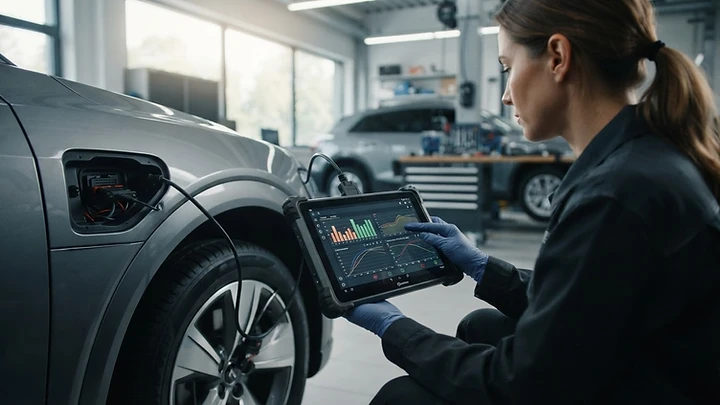
The gold standard method for a secure purchase has shifted to readings via the OBD-II port. Diagnostic equipment, such as that offered by AVILOO, allows for the extraction of raw battery data, surpassing the superficiality of the car's infotainment systems. This transition has forced independent workshops to reinvent themselves; those who do not master vehicle telemetry are effectively out of the EV evaluation game.
What is the Global Impact of the Confidence Crisis
Globally, we are seeing increasing pressure on automakers to create standardized battery health certificates. Without such standardization, the residual value of fleets from rental companies and individual owners remains hostage to third-party tests. In the long term, the excessive use of ultra-fast chargers is the main culprit, as accelerated SOH degradation directly affects the global resale value of models that lack robust thermal management systems.
What Future Trends Can We Infer
Battery chemistry will be the watershed moment. Models with LFP (lithium iron phosphate) batteries, known for enduring more intensive charge cycles with less degradation, tend to maintain better resale value than older NMC (nickel-manganese-cobalt) models. Furthermore, the rise of the vehicle subscription market could become the preferred alternative for those who fear the risk of a "dead battery" outside of warranty, shifting the cost of technological obsolescence to the service providers.
What Opportunities Arise with the Transition
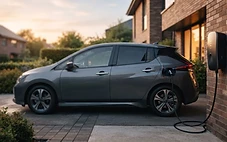
For the market, the opportunity lies in creating battery certification services for dealerships and buyers. Companies specializing in independent diagnostics are becoming essential. For buyers, it is worth seeking out vehicles with a detailed history of slow charging, preferably at home, which preserves SOH for longer.
What Risks Emerge in Buying Used EVs
The biggest risk is acquiring a vehicle with degraded batteries without prior diagnosis. The cost of replacing individual modules or the entire pack out of warranty is prohibitive and can render the investment unviable. According to guidance from EcoImport, understanding high-voltage components is vital before closing a deal.
Leia também