How to Invest in AI Infrastructure Stocks in 2026
Discover how global capital is shifting toward AI infrastructure in 2026. Learn where to invest to capture real value in today's evolving technology market.
Nivagoo
Listen to this article
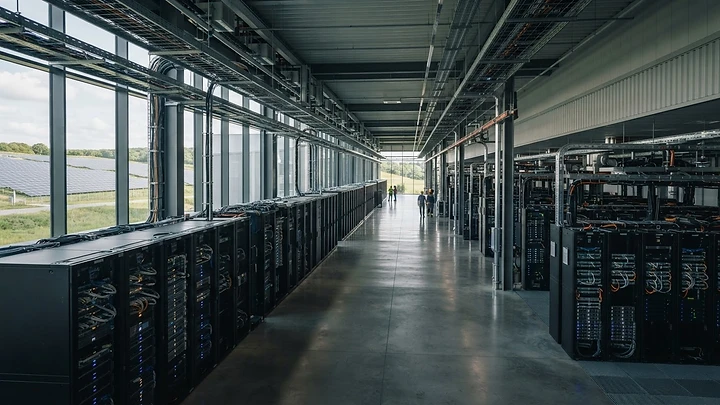
The financial landscape is undergoing a major paradigm shift in 2026. After the initial hype surrounding software and consumer applications, investor focus has definitively moved toward AI infrastructure. With global investments projected to hit $769 billion, as noted in the McKinsey Technology Trends Outlook 2026, building the physical foundation for artificial intelligence has become the primary battleground for institutional capital.
The Shift to Heavy Infrastructure
The tech sector has crossed a threshold where data scale and the sophistication of agentic AI have outstripped existing installed capacity. In 2026, we are witnessing a 'pick-and-shovel' gold rush. While investors previously chased high-margin software firms, value is now concentrated in data centers, fiber-optic networks, and—most crucially—the energy grid required to sustain this voracious power consumption. Data from Lofotr Investors confirms that capital concentration in infrastructure has tightened liquidity for niche startups, forcing a broader market consolidation.
The Rise of Agentic AI
The rise of agentic AI—systems capable of executing complex, autonomous workflows—demands exponentially more computing power than previous generations. For an AI agent to make real-time decisions, latency must be near zero and GPU processing must be uninterrupted. This necessity has forced Big Tech to restructure balance sheets, prioritizing Capex for fixed assets. Demand has outpaced supply, creating a bottleneck that rewards companies controlling the hardware and energy supply chain.
Energy: The New Tech Utility
The biggest surprise for the 2026 financial market is the elevation of energy infrastructure firms, such as GE Vernova and Enphase, as vital cogs in the AI supply chain. According to the TMGM Trading Academy, energy transition is no longer just an environmental agenda item; it is an operational requirement for cloud computing. The integration between energy providers and data centers now defines the long-term success of major cloud platforms.
The Global Impact of AI Infrastructure
The race for computational sovereignty is reconfiguring industrial borders. Nations are competing to secure self-sufficiency in chips and energy, directly impacting commodity prices and global trade policy. While this massive capital flow is accelerating scientific breakthroughs in materials engineering, it is also concentrating market risk among a few high-end hardware suppliers, as noted in recent AltIndex analyses.
What ROI Data Reveals
One frequently overlooked gap is the actual profitability of the massive funding rounds of 2026. While companies like OpenAI and Anthropic continue to raise capital, the real ROI of these operations remains thin when weighed against the maintenance costs of physical infrastructure. Investor due diligence in 2026 requires looking past future revenue promises and focusing on the operational efficiency of physical assets.
Future Trends and 2027 Regulations
A potential market blind spot is the new AI safety regulation set to take effect in 2027. These standards are expected to mandate infrastructure audits, which may inflate OpEx for industry players. Cautious investors should monitor how firms are preparing their balance sheets for regulatory compliance, a factor that will likely determine the survival of smaller players.
Strategic Opportunities: Investing Wisely
The ideal 2026 portfolio balances the stability of energy infrastructure with the scale of semiconductor and networking giants. Distinguishing between 'pure-play' AI firms, like C3.ai, and scalable infrastructure firms, like NVIDIA or Palantir, is the key strategy recommended by Investing.com to hedge against volatility. The focus should be on companies with physical moats—assets that cannot be easily replicated by competitors.
Risks: Saturation and the Infrastructure Bubble
A major concern for fund managers is potential post-2026 data center saturation. If demand for agentic AI fails to scale at the projected rate, excess capacity could lead to a devaluation of infrastructure real estate. Furthermore, reliance on a limited number of hardware manufacturers represents a systemic risk that could trigger market corrections if any disruptions occur in the global supply chain.
Leia também