Arctic Security Pact: How the Greenland Deal Rewrites Global Trade
A landmark security pact in Greenland is transforming Arctic geopolitics. Discover how this shift redefines NATO defense and global trade routes.
Nivagoo
Listen to this article
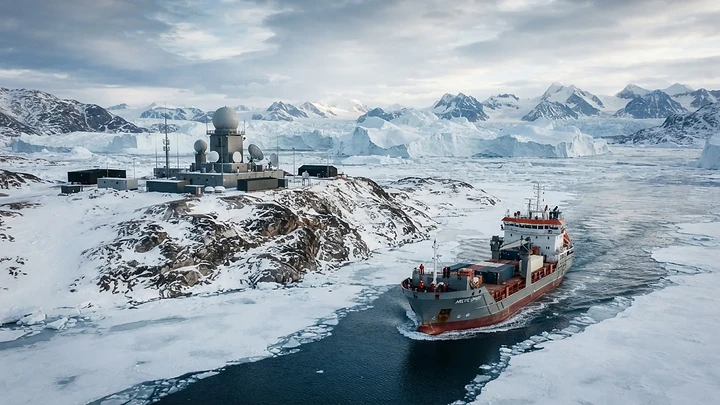
Arctic geopolitics have just undergone a profound structural shift. With the formalization of a new security agreement between the United States, Denmark, and Greenland, the region has transitioned from a remote icy wilderness into the epicenter of NATO’s strategic defense framework. This pact not only redraws the boundaries of regional influence but fundamentally alters the dynamics of global trade in an era of rapid climate change.
What Happened The treaty signed at the UN headquarters marks a new epoch for Greenland.
According to reports, the pact mandates the construction of two new U. S. military bases and the modernization of existing surveillance infrastructure.
While original rhetoric surrounding the negotiations often leaned toward "indefinite control," Danish diplomacy characterizes the agreement as a necessary bolster to NATO’s collective security. The accord is clear: while formal sovereignty remains Danish, the management of the island’s physical security is now integrated into American command, explicitly prohibiting military installations from rival powers such as Russia and China.
Why It Happened The primary catalyst for this shift is the melting Arctic ice.
As polar ice caps recede, maritime routes once deemed impassable are becoming viable, drastically reducing shipping times between Asia and the West. Greenland’s strategic importance as a sentinel of the North Atlantic and a gateway to these new logistical corridors has become impossible to ignore. For Washington, securing the territory is a vital preemptive measure to curb Russian expansionism and the growing economic influence of China in the High North.
What Has Changed Greenland has ceased to be a peripheral territory and has become a central pillar of NATO’s defense strategy. However, this imposed militarization does not ignore local realities. Exclusive findings indicate the agreement includes protective clauses for Greenland’s traditional lifestyle, ensuring that military expansion does not stifle the hunting and fishing sectors that remain the backbone of the local subsistence economy.
Nevertheless, the lack of a public timeline for base construction and ambiguity regarding the specific financial burden on U. S. taxpayers remain significant points of contention in both academic and parliamentary circles.
The Global Impact of the Arctic Security Pact The impact on transatlantic security is immediate.
By creating a "no-go zone" for rival bases, the island effectively shields the North Atlantic from the strategic incursions of Moscow and Beijing. Economically, the move enables shorter, more efficient trade routes that threaten to reshape the global logistics map. Furthermore, this movement is symptomatic of the global race for critical minerals—essential for the energy transition—whose abundant reserves in Greenland now fall under the direct protective umbrella of Washington.
Future Trends to Anticipate The remilitarization of the Arctic is now a consolidated trend.
Geopolitical competition points to an era of constant monitoring, featuring the expansion of next-generation missile defense systems and advanced radar networks. The Chinese response remains the ultimate wildcard; whether Beijing will be contained through commercial sanctions or attempt to find alternative routes of influence is a core concern for global stock markets. Submarine monitoring and aerial surveillance will become routine, inevitably raising operational costs for all actors in the region.
Emerging Opportunities
The urgent need for infrastructure upgrades on the island opens doors for investment in ports, airports, and power grids. Greenland’s untapped reserves of critical minerals, necessary for electric vehicle batteries and semiconductors, position the region as a strategic supplier for the West. The challenge lies in balancing the scale of industrial extraction with environmental preservation, particularly as the specific ecological impacts of intensified mining are not yet fully measured.
Emerging Risks The most significant risk is the escalation of military tensions.
The "containment doctrine" applied to the Arctic could lead to an increased frequency of diplomatic friction and military posturing near exclusive zones. Environmentally, the intensification of human activity in such a fragile ecosystem—lacking comprehensive impact studies—threatens to accelerate the degradation of local biodiversity. Additionally, an over-reliance on a single power for regional security may create long-term internal fractures within Danish politics.
Leia também