Trump Unveils $500B 'Stargate' AI Infrastructure Megaproject
The Trump administration has launched 'Stargate,' a massive $500 billion initiative to cement U.S. AI dominance through unprecedented infrastructure expansion.
Nivagoo
Listen to this article
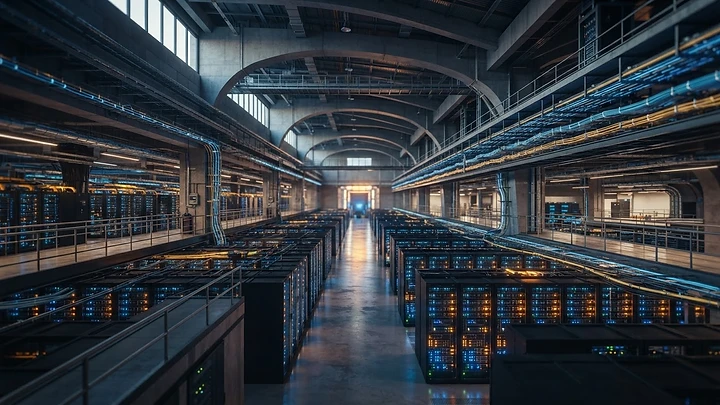
The Trump administration has taken a decisive step in the global technology race by formalizing Project Stargate, a $500 billion investment aimed at building large-scale AI infrastructure. This capital infusion, representing the largest private-sector commitment in tech history, is designed to secure American sovereignty in artificial superintelligence by the end of the decade. Confirmed in January 2025, the announcement signals a paradigm shift where the federal government acts as a catalyst for a coalition involving industry giants like OpenAI, SoftBank, and Oracle.
While Stargate concentrates $500 billion into data centers, it is critical to distinguish this initiative from other multibillion-dollar commitments announced separately by Nvidia, which remains focused on high-performance chip manufacturing.
What Happened
The federal government has sealed a self-regulation agreement with tech leaders, prioritizing rapid growth over restrictive 'guardrails. ' Project Stargate has set the ambitious goal of reaching 10 gigawatts of processing capacity by 2029. Executives such as Sam Altman and Masayoshi Son have been instrumental in structuring this partnership, which leverages federal tax incentives alongside private venture capital, including significant contributions from sovereign wealth funds as documented in agreements with the United Arab Emirates.
Why It Happened
The primary objective is technological sovereignty in the face of competition from China. The administration maintains that any restrictive regulation acts as a bottleneck to the acceleration of 'superintelligence' models. By removing bureaucratic hurdles, the government aims to attract massive external capital and strengthen the American industrial base, effectively transforming the U.
S. into the definitive hub for training large-scale language models and global data processing.
What Changed American industrial policy has abandoned cautious rhetoric for a model of direct collaboration with Big Tech. The 'self-regulation' strategy is the cornerstone of this new era, where corporations pledge internal ethical standards in exchange for operational freedom and tax benefits. However, antitrust watchdogs warn that this deep integration between the government and a small group of corporations could stifle competition from smaller startups and create a dangerous structural dependency.
The Global Impact The pressure on other nations is immediate.
European and Asian economies now face the challenge of competing against a 10-gigawatt infrastructure, which necessitates monumental spending on energy and hardware. Environmental experts point out that the energy mix required to sustain such demand—unless shifted to nuclear or advanced renewables—will result in a drastic increase in carbon emissions, placing the sector under intense social scrutiny.
Future Trends The data center market is shaping up to be the next 'gold rush.'
The demand for high-performance chips, such as those produced by Nvidia and Broadcom, will reach unprecedented levels. We are observing a consolidation trend where only companies capable of capitalizing trillions of dollars will be able to sustain the gigawatt-scale requirements for training advanced AI systems.
Emerging Opportunities
This project opens a vast array of opportunities for the energy and heavy construction sectors. Facilitating 10 gigawatts requires an urgent modernization of the American power grid, benefiting firms involved in grid infrastructure, small modular reactors (SMRs), and thermal efficiency. The creation of high-skilled jobs in data engineering and critical infrastructure is an expected byproduct of this investment cycle.
Potential Risks
The primary fear among economists is the formation of a 'tech bubble' fueled by excessive speculative capital. Furthermore, market concentration among OpenAI, Oracle, and SoftBank raises serious questions regarding digital sovereignty and equitable access to technology. A technical failure in any one of these colossal data centers could generate systemic impacts on both essential service infrastructure and financial market stability.
Key Takeaways - Project Stargate targets 10 GW of capacity by 2029 with $500B in funding. - Private investment leads the initiative, featuring partnerships between OpenAI, Oracle, and SoftBank. -
A self-regulation agreement replaces rigid federal oversight. - Risks include environmental impacts from extreme energy demands and significant market concentration.
Leia também