Project Stargate: Inside Trump’s $500B AI Infrastructure Bet
Project Stargate, the massive $500B AI initiative, faces mounting scrutiny over environmental impact and governance under the newly formed AI Force.
Nivagoo
Listen to this article
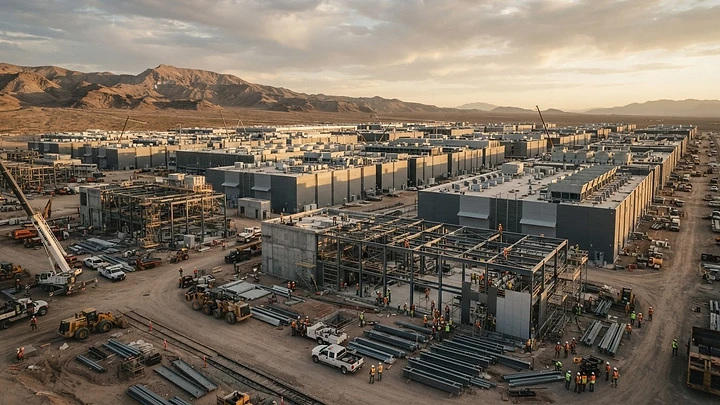
The global technological arms race reached a fever pitch in January 2025 with the unveiling of Project Stargate, a $500 billion venture aimed at overhauling American AI infrastructure. This strategic partnership, spearheaded by OpenAI, Oracle, and SoftBank, seeks to construct a network of massive supercomputers, effectively securing the foundation for the next generation of artificial intelligence. Yet, initial excitement surrounding this US investment has shifted toward heated debates regarding operational feasibility and ethical standards.
What Happened The project was launched as a historic effort to solidify American computational supremacy.
According to reports from Stabroek News, the initiative promised the creation of 100,000 direct jobs and the development of sprawling data center complexes. However, reality has proven more challenging. As highlighted by Futurism, 'Project Jupiter,' an operational hub in New Mexico, has faced fierce local resistance due to the massive consumption of electricity and water resources.
In response to these roadblocks, the White House established the 'AI Force,' a government body designed to fast-track land permitting and bypass state-level environmental regulations, igniting a national debate over federal overreach.
Why It Happened
The driving force behind Stargate is the strategic imperative to maintain global leadership in the face of intense competition. TechTarget reports that the initial $100 billion structure was designed to guarantee national sovereignty amidst a global scarcity of processing power. AI's insatiable demand for energy and high-end chips is beyond the current scope of the private sector, compelling the state to act as a guarantor and primary facilitator.
What Changed Project Stargate signals a fundamental shift: a transition from a purely corporate-driven AI ecosystem to a model of centralized national infrastructure. The 'AI Force' serves as an executive arm for acceleration, fundamentally altering land-use policy. While the initiative was initially framed as a private sector project, the active government intervention to mitigate local opposition implies a massive indirect subsidy, the long-term cost of which remains unclear to the American taxpayer.
Global Impact The strategy extends far beyond U.S.
borders. Through the 'OpenAI for Countries' model, Stargate is being marketed as a global infrastructure standard for allied nations, as noted by AI Tool Discovery. This shifts the geopolitical landscape, as dependence on U.
S. -backed hardware architectures cements Washington’s position as the primary hub for global AI development, effectively standardizing infrastructure under the OpenAI-Oracle partnership's terms.
Future Trends
The current trajectory suggests growing friction between the hunger for AI infrastructure and local sustainability demands. Achieving the 10-gigawatt target by 2029 appears increasingly ambitious as community opposition intensifies. Furthermore, the decentralization of the electrical grid to support these massive data hubs will likely force the government to pivot toward heavy investment in large-scale renewable energy and grid-storage solutions.
Opportunities
The Stargate project creates openings for investments in clean energy technologies specifically tailored for high-density data centers. Companies capable of aligning energy efficiency with the strict requirements of the 'AI Force' will secure significant competitive advantages in the race to build national computing power, particularly within the advanced semiconductor sector.
Risks Ahead The primary risk involves governance and persistent conflicts of interest.
An investigation by The Washington Post revealed that personal investments by the Trump family in infrastructure-related firms present significant ethical hazards. Furthermore, should the project fail to deliver on its infrastructure promises, the social backlash against the state-sponsored use of public resources for private data centers may prove insurmountable. Reliance on a narrow consortium also raises concerns regarding capital concentration, which could potentially stifle independent innovation in the long term.
Leia também