The Rise of Radical Rhetoric in 2026 American Politics
US politics in 2026 faces unprecedented polarization driven by digital influencers. How are campaigns managing this new, volatile landscape?
Nivagoo
Listen to this article
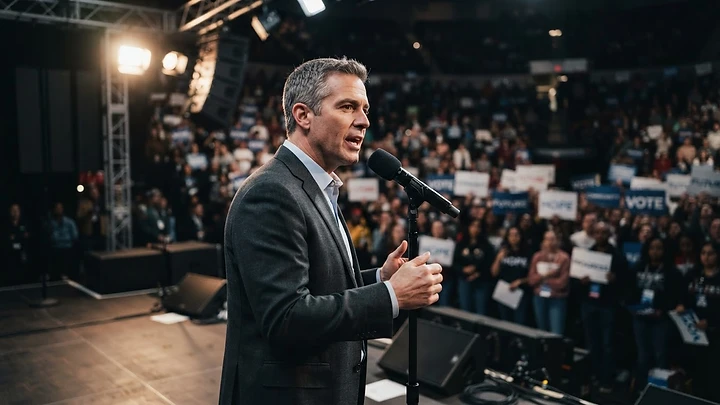
American politics in 2026 has reached a boiling point where the boundary between digital entertainment and formal party strategy has become almost invisible. The rise of radical rhetoric, epitomized by influencers like Hasan Piker, is redefining the electoral map and forcing legacy politicians to manage image crises in real-time.
What Happened Recently, Hasan Piker caused a political earthquake by comparing the United States to Al-Qaeda during a live broadcast, triggering an immediate domino effect. Senate candidate Abdul El-Sayed felt compelled to issue a formal statement of denunciation, characterizing Piker as merely a 'California streamer. ' This maneuver aimed to mitigate electoral damage, particularly in Michigan, where internal party polling suggests that direct association with Piker increases rejection among undecided voters by 14 percentage points.
Why It Happened
The necessity for mass engagement has led candidates to chase audiences on streaming platforms. The algorithms powering these networks prioritize content with high emotional impact, which favors hyperbolic rhetoric over nuanced analysis. According to experts at Facing History & Ourselves, this mechanism creates an 'echo chamber' system where extremism is rewarded with organic visibility that far outpaces traditional media outlets.
What Changed
The American political landscape of 2026 illustrates a deep integration between radical entertainment and the formality of the ballot box. Unlike previous decades, where communication was vetted by press offices, the current flow is direct and unfiltered. Candidates now face the daunting challenge of managing allies who possess loyal digital bases, but whose inflammatory statements provide constant ammunition for the opposition, as noted by Fox News in its attempts to link Piker as the 'unofficial brand' of the Democrats.
Global Impact
The volatility of internal American political discourse projects the image of a fractured nation. As reported by The Jerusalem Post, the virulence of this domestic debate and the comparison of national institutions to terrorist groups undermine the credibility of American diplomacy. This creates significant uncertainty for international allies who witness a nation seemingly unable to maintain a basic consensus on fundamental democratic values.
Future Trends
The trend suggests that candidate identity will be increasingly outsourced to the digital ecosystem. Political parties are losing control over the central narrative, while influencers dictate the tone of the conversation. The resistance shown by figures like El-Sayed in accepting radical support is merely the first step of a long divorce process between the traditional party structure and the new digital activism, which, according to the World Socialist Web Site, operates under its own independent agendas.
Emerging Opportunities
The saturation of misinformation creates a massive opening for curation and fact-checking outlets focused exclusively on the attention economy. The demand for platforms that translate 'digital political jargon' into clear, neutral language, while providing context for influencer claims, is a latent gap in the market. Outlets that successfully balance sources like Ground News, aggregating multiple perspectives, are gaining technical authority in an environment defined by deep institutional distrust.
The Risks
The greatest risk is the erosion of democratic norms through the normalization of hyperbolic language. Essays from Hillsdale College emphasize that when political debate replaces persuasion with vitriol, political violence stops being a distant possibility and becomes an imminent risk. The alienation of moderate voters, exhausted by extreme polarization, threatens the long-term stability of the nation's core institutions.
Leia também