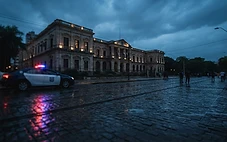
Brazil's Infrastructure Collapse: A Warning for Global Cities
Data reveals 91.5% of Brazilian cities face climate-related disasters, exposing the unsustainable cost of reactive urban management.
Nivagoo
Listen to this article
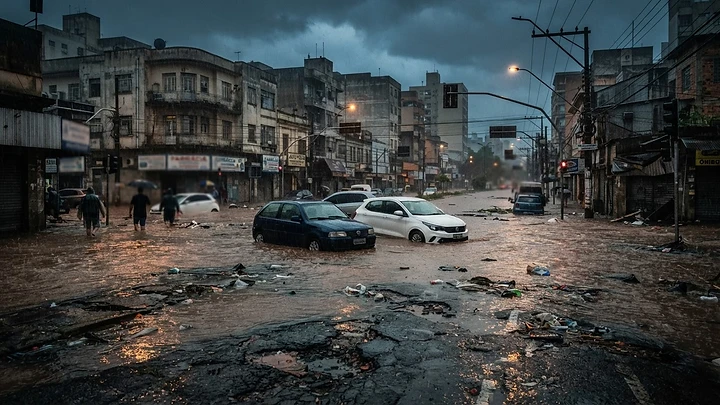
The relentless escalation of extreme weather events is pushing the resilience of Brazilian cities to a breaking point. Alarming data from the Agência FAPESP indicates that between 1991 and 2024, over 90% of the nation's municipalities were hit by natural disasters. This highlights a critical reality: current urban infrastructure has become obsolete in the face of shifting climatic patterns. This failure to adapt is not merely a technical oversight; it is a manifestation of political decision-making that favors the urgency of reconstruction over the strategic necessity of prevention.
The Crisis Facing Urban Infrastructure
Over the past three decades, Brazil has witnessed an exponential surge in the frequency and intensity of floods, droughts, and landslides. According to CNN Brasil, regions once considered safe have turned into hotspots for human and economic loss. Drainage systems, road paving, and slope containment—designed under mid-20th-century climate models—are no longer capable of managing current precipitation levels, leading to the collapse of essential services and the isolation of entire communities.
The Failure of Public Management
At the heart of the crisis lies a systemic budget inefficiency. As reported by O Globo, Brazil spends, on average, three times more on rebuilding disaster-stricken areas than on preventative infrastructure. This reactive management model perpetuates a cycle of vulnerability, where public funds are constantly drained to mitigate immediate damages, leaving urban planning without the structural support required to address long-term risks.
New Tools and Technological Shifts
The digitization of public administration is starting to offer glimmers of progress. The Painel Cidades, launched by INPE, empowers local managers to identify vulnerabilities across 5,570 municipalities. Furthermore, artificial intelligence is enabling more precise mapping of high-risk areas. However, the adoption of these technologies remains uneven and insufficient to overcome the historical legacy of precarious infrastructure.
Global Impacts of Local Crises
The urban crisis in Brazil mirrors a challenge that transcends borders. The European experience, as highlighted by Horizon Magazine, shows that even historical cities struggle to adapt century-old infrastructure to new extremes. The 'quintuple helix' model, which integrates governments, citizens, and the private sector, is emerging as a global benchmark for resilience governance. Without structured funding for developing nations, the risk of transnational humanitarian crises fueled by climate displacement becomes an increasingly tangible reality.
Future Trends in Urban Adaptation
The mass adoption of Nature-Based Solutions (NBS), such as rain gardens and bioswales, is the primary trend for mitigating urban flooding. As detailed by Um Só Planeta, integrating these elements into the urban fabric will enable more effective natural drainage. Simultaneously, we anticipate a rise in the pressure for planned relocation, moving populations out of high-risk areas before new disasters strike.
Emerging Opportunities
The environmental engineering and consulting sector faces a vast market for the development of green infrastructure and satellite-based monitoring technologies. Implementing resilience strategies, such as those discussed by CORDIS, allows governments to attract ESG-focused private investment, transforming the need for adaptation into a genuine opportunity to modernize industrial and transport infrastructure.
The Risks of Inaction
The greatest threat remains decision-making paralysis. As analyzed by DCI - UNIFESP, urban precarity deepens social inequality, pushing lower-income populations into the most vulnerable areas. If adaptation is not coupled with housing policies and social justice, the human and economic cost of future disasters could lead to the collapse of municipal health and food security systems.