Biotech’s Breakthrough: How Gene Editing Cures Rare Diseases
Gene editing has evolved from lab theory to clinical reality with the case of baby KJ. Explore how 'n-of-one' personalized medicine is revolutionizing healthcare.
Nivagoo
Listen to this article
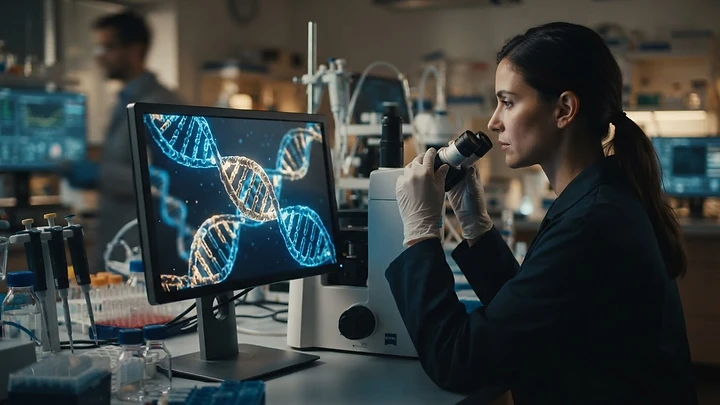
Biotechnology has reached a historic inflection point, where the promise of curing lethal conditions has shifted from theoretical research to tangible clinical reality. With the rise of gene editing, precision therapies are rewriting the DNA of patients, offering hope where previously only palliative care existed. This advancement, fueled by technologies like CRISPR and its derivatives, marks a fundamental transition in modern medicine: the end of the 'one-size-fits-all' era and the dawn of 'n-of-one' medicine.
The Milestone: A Triumph for Personalized Medicine
The turning point was the clinical case of baby KJ, recently validated by the global scientific community. He was the first patient successfully treated via a base editing therapy designed exclusively for his rare mutation. Unlike previous approaches, this treatment was tailor-made, proving that biotechnology can now encode specific cures for individual genomes.
The Drivers: Science Meets Regulation
Success extends beyond the laboratory. Science has progressed through the distinction between base editing and prime editing, which allow for safer and more precise alterations than traditional CRISPR-Cas9, minimizing off-target mutations. Concurrently, the FDA established a specific regulatory pathway, the 'plausible mechanism framework,' which permits the approval of therapies for a limited number of patients provided the biological logic is robust.
The Shift: From Mass Pharmacy to Bespoke Treatment
The pharmaceutical business model is under pressure. The transition to personalized medicine demands a rethink of manufacturing and pricing. While the industry traditionally focused on 'blockbusters,' the future points toward precision therapies where high upfront costs are offset by the dramatic reduction in long-term hospital expenses for chronic patients.
The Global Impact of Biotechnology
The impact is a complete redefinition of how we treat once-fatal conditions, such as CPS1 deficiency. However, gaps remain. We still lack decades of data on the stability of these edits in pediatric patients, nor is there full clarity regarding long-term epigenetic side effects. Furthermore, equity in access remains an urgent political issue: how do we ensure that multi-million dollar treatments are accessible within public healthcare systems?
Future Trends
The next frontier of gene editing is its expansion into common diseases, such as Alzheimer's and cardiovascular conditions. The use of Artificial Intelligence for protein design will accelerate the creation of these molecules, decentralizing the production of complex drugs.
Emerging Opportunities for Innovation
The market is opening a range of opportunities for startups focused on delivery systems, such as lipid nanoparticles (LNPs) and optimized viral vectors. Automation in genetic design is currently the most attractive sector for global investment.
New Risks in the New Era
The debate surrounding human germline modification remains the greatest ethical challenge. Fears of eugenics and irreversible changes to the human gene pool demand an international legislative harmonization that does not yet exist.