Residential Solar Power: 2026 Costs and ROI Explained
Is home solar worth the investment in 2026? We analyze installation costs, current regulations, and the real-world timeline for achieving a full ROI.
Nivagoo
Listen to this article
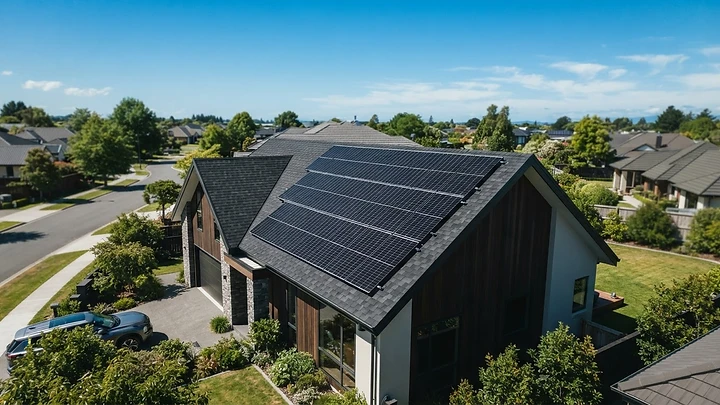
Introduction to Residential Solar in 2026 Adopting residential solar energy has become a premier strategic financial decision for homeowners aiming to mitigate the impact of rising electricity tariffs. As the sector matures, installing photovoltaic (PV) systems has shifted from an eco-friendly statement to a low-risk investment with predictable financial returns. According to data from Radar Solfácil, the average price per watt-peak (Wp) in Brazil saw a 7% decrease in the first quarter of 2026 compared to the previous year, a direct result of economies of scale and increased competition among installers.
What Happened The Brazilian market has reached a new level of efficiency.
What was once a niche pursuit is now a streamlined service, with standardized quotes and high-quality equipment availability. The drop in prices per Wp, echoed by reports from Midiamax, confirms a robust local supply chain. For the average consumer, this translates into more accurate quotes—typically ranging from R$ 10,000 to R$ 40,000—depending on power requirements, as noted by Canal Solar.
Why It Happened
This expansion is driven by the relentless quest for energy independence against frequent tariff hikes. The need to hedge against fixed energy costs has transformed PV systems into a property value-enhancing asset. SolarAgora highlights that the cost per kWp in 2026 fluctuates between R$ 3,500 and R$ 5,500, making projects viable even for medium-consumption households.
What Changed: The Impact of Law 14.300
A critical factor for current investors is understanding Law 14. 300. The new net-metering rules introduced grid usage fees, which subtly adjust the payback calculation.
While the return is not as immediate as in the pre-law era, the investment remains solid. Payback periods vary between 3 and 7 years, depending on local utility tariffs and solar irradiation, still offering an Internal Rate of Return (IRR) that outperforms many traditional fixed-income investments.
Comparative Analysis: Tier 1 vs.
Generic Brands When evaluating installation costs, panel quality is the decisive factor. Tier 1 panels, recognized for their bankability and rigorous manufacturing standards, offer superior efficiency and lower annual degradation—typically below 0. 5% per year.
While generic brands may offer a lower upfront cost, the 'Total Cost of Ownership' (TCO) over a decade is often higher due to premature performance declines and increased maintenance needs. Maintaining system integrity requires periodic cleaning and monitoring via smart inverters, which allow for real-time fault detection.
Global Impact Distributed generation increases the resilience of the national power grid, reducing strain during peak demand hours. This shift democratizes access to renewable energy, aligning local markets with global goals for energy transition and carbon emission reduction.
Future Trends Residential solar integration with home battery storage is the next frontier.
As storage prices gradually fall, total grid independence is within reach. Furthermore, AI-driven energy management will soon optimize self-consumption and surplus sales, turning homes into intelligent micro-power plants.
Opportunities Ahead Professional sizing consultancy is the best way to ensure maximum ROI.
Misconfigured projects—whether over-sized or under-sized—are the primary cause of investor frustration.
Potential Risks
The main risk is hiring unreliable contractors or using low-quality components that fail to meet technical standards, compromising both the system's lifespan and property safety. Always opt for installers certified by top manufacturers.
Sources and References Canal Solar (https://canalsolar.com.br/energia-solar-residencial), Estadão (https://www.estadao.com.br/einvestidor/quanto-custa/quanto-custa-energia-solar-instalar-casa), SolarAgora (https://solaragora.com.br/quanto-custa-instalar-energia-solar-em-2026), Aldo Solar (https://www.aldo.com.br/blog/quanto-custa-uma-placa-solar), Midiamax (https://midiamax.com.br/trends/2026/09/06/energia-solar-vale-a-pena-veja-quanto-custa-o-sistema-e-quanto-ele-pode-economizar), Olhar Digital (https://olhardigital.com.br/2026/04/06/curiosidades/quanto-custa-energia-solar-residencial-e-em-quanto-tempo-o-investimento-compensa).
Leia também