Quantum Computing in 2026: Reshaping Global Industries
Discover how quantum computing is evolving in 2026. We explore the industries leading the revolution and the practical impact of this technological breakthrough.
Nivagoo
Listen to this article
The Quantum Landscape in 2026
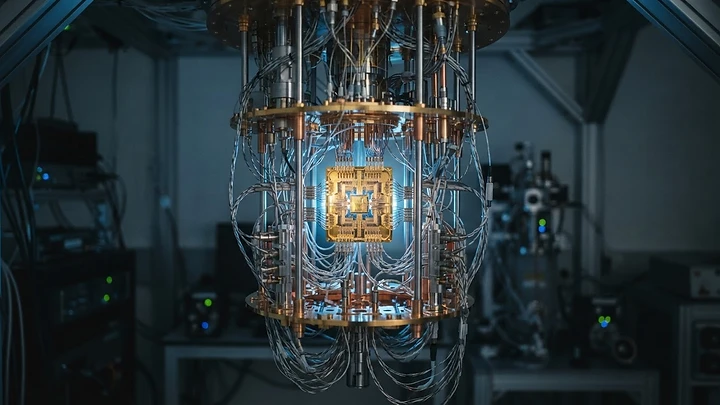
By 2026, quantum computing has officially transitioned from a theoretical laboratory promise to a specialized tool with tangible, real-world applications. Unlike classical computers, which rely on binary bits, quantum technology leverages the power of qubits. This capability allows for the processing of massive, complex datasets in mere fractions of the time required by traditional systems. This massive leap in computational power doesn't just improve operational speed—it solves problems that were previously considered computationally intractable.
As we reach a level of maturity characterized by increasing qubit counts and error mitigation, tech giants and research institutions are focusing on integrating quantum algorithms into existing enterprise workflows. The objective for 2026 is clear: achieving practical quantum advantage for specific industrial use cases.
Industries Transformed by Quantum Tech
The transition to a quantum-capable landscape is not uniform, but sectors with high data density and complex optimization needs are leading the way.
The Pharmaceutical Industry and Material Science
Molecular simulation stands out as perhaps the most promising application. In 2026, the discovery of new drugs and advanced materials is being significantly accelerated. The precision required to model molecular interactions is exhausting for traditional hardware, but it is perfectly suited for quantum systems. Consequently, the time-to-market for breakthrough medications is being drastically reduced, saving billions in research and development costs.
Finance and Risk Optimization
The financial sector thrives on real-time probability analysis. Quantum technology provides clear competitive advantages in portfolio management, the pricing of complex assets, and sophisticated fraud detection. Advanced algorithms enable financial institutions to execute Monte Carlo simulations with unprecedented precision, greatly improving systemic risk management in volatile global markets.
The Role of Tech Innovation in Cybersecurity
One of the most pressing topics for 2026 is data security. As quantum computing advances, current encryption standards based on complex mathematical problems risk becoming obsolete. This reality is forcing governments and global corporations to pivot toward post-quantum cryptography.
- Protocol Transition: Rapid adoption of security standards designed to be resistant to quantum-based attacks.
- Strategic Awareness: Proactive preparation of critical infrastructure to prevent long-term data exposure.
- R&D Investment: Massive capital allocation toward cryptographic keys that utilize quantum mechanics themselves to ensure information integrity.
The Future of Computing: The Road Ahead
Looking toward the remainder of the decade, the integration of these machines into hybrid data centers—combining classical cloud infrastructure with quantum processing—is becoming the industry standard. The future of computing is not about replacing the desktop; it is about leveraging the sheer power of quantum mechanics for high-complexity, specific tasks. The collaboration between scientific research and industry remains the primary engine driving progress in 2026. We are only at the beginning of a fundamental shift in how we process information and solve the greatest challenges of the 21st century.