
NVIDIA GR00T 2: The Physical AI Revolution with 400K Hours of Training
NVIDIA unveils GR00T 2, a foundational model trained on 400,000 hours of data to master human-like dexterity and autonomy in humanoid robotics.
Nivagoo
Listen to this article
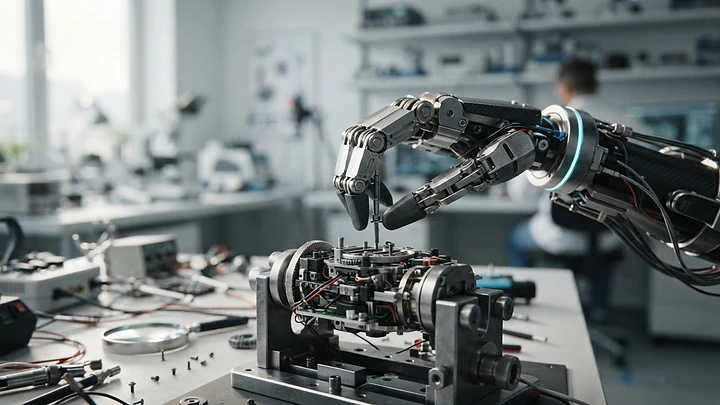
The era of Physical AI has reached a new level of maturity with NVIDIA’s announcement of GR00T 2. In a move poised to redefine industrial automation and the services sector, the hardware giant has unveiled an architecture focused on dexterity, utilizing a vast data pipeline to teach robots to perform tasks requiring human-level precision. This system is not merely an incremental update; it is a technical leap that integrates high-performance simulation with advanced language and vision models.
What happened
At the CoRL conference, NVIDIA introduced GR00T 2 alongside Isaac Lab 3.0, a simulation platform leveraging the Newton engine to deliver up to a 2.5x performance boost. The model, described by the company as a 'world action model,' was trained on a 'Data Pyramid' totaling over 400,000 hours of egocentric human video and teleoperation data, significantly surpassing the 100,000-hour mark mentioned in early reports. Furthermore, the 'GR00T 2 Turbo' variant is purpose-built to run locally on Jetson Thor hardware, allowing humanoid robots to process decisions in real time without total reliance on cloud infrastructure.
Why it happened
Robotics faced a critical bottleneck: the reliance on expensive and time-consuming physical data collection. As highlighted in the technical whitepaper, the shift toward a massive simulation-based model allows robots to learn dexterity without needing every task to be manually programmed. NVIDIA’s strategy is to mitigate data scarcity through the observation of human motion, enabling the AI to infer complex maneuvers independently.
What changed
The primary shift is the evolution of robotics from simple navigation to skillful manipulation. Previously, machines were limited to navigating warehouse floors; now, GR00T 2 enables delicate assembly work. However, analysts at CellCog note that while NVIDIA promotes the system as open, the lack of transparency regarding model weights and specific licensing still creates uncertainty regarding the level of control companies will truly have over this technology.
Global Impact
The impact of this technology is reverberating across the global supply chain. By automating assembly and fine logistics, industrial productivity is set to rise, potentially altering manufacturing economics in both developed and emerging markets. The technological race for robotic AI infrastructure has become a matter of industrial sovereignty, with NVIDIA consolidating its position as the backbone of this ecosystem.
Future Trends
The clear trend is the solidification of 'Physical AI,' where language and vision models converge to govern physical actions. Robots that learn via observation are likely to become the standard, driving down operational costs. Nevertheless, questions concerning failure rates in unstructured environments outside of simulation remain, and full commercial availability is still an evolving target.
Opportunities
For automation firms, leveraging the NVIDIA ecosystem opens doors to developing robots capable of operating in hotels, hospitals, and high-complexity manufacturing facilities. Reducing the need for manual teleoperation to train each new task represents an unprecedented economy of scale.
Risks
The risks involve extreme dependence on a single ecosystem and the ethical dilemmas surrounding data sustainability. Using human videos raises significant questions regarding privacy and copyright that currently lack a clear regulatory framework, in addition to the cybersecurity challenges inherent in environments where autonomous robots work alongside people.