Hegseth Launches AutoWarCom to Revolutionize Drone and AI Warfare
Secretary of Defense Pete Hegseth has established AutoWarCom, a new command dedicated to fast-tracking AI and drone integration within the US military.
Nivagoo
Listen to this article
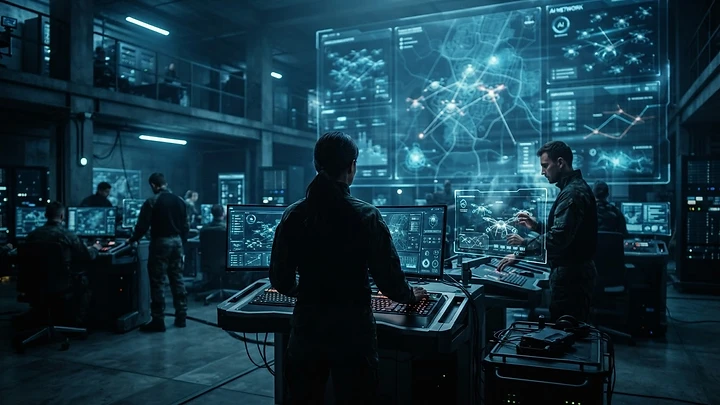
Defense Secretary Pete Hegseth has officially established the Autonomous Warfare Command (AutoWarCom), a new four-star command designed to overhaul American military doctrine through the mass integration of drones, robotics, and artificial intelligence. This restructuring, the most significant since the creation of the U. S.
Space Command in 2019, signals a fundamental paradigm shift in how the Pentagon approaches modern warfare.
What happened
The announcement of AutoWarCom consolidates the development and deployment of autonomous technologies under a single, high-level authority. According to CNBC TV18, the initiative aims to dismantle the silos that have long fragmented the various branches of the armed forces. As reported by ABC News, the plan includes a 20% reduction in the number of general officers—a controversial measure intended to slash bureaucracy and free up capital to fund the rapid technological innovation promised by the new command.
Why it happened
This command is a direct response to the historic inefficiencies within the Pentagon’s acquisition system, which often spends years integrating technology that the private sector delivers in months. The urgent need to curb spending on multi-billion dollar conventional platforms has accelerated the pivot toward drone swarms and autonomous systems, which offer higher scalability at a fraction of the cost. As noted by industry observers, this represents an aggressive modernization effort during peacetime to maintain strategic dominance against global competitors.
What changed with AutoWarCom The command structure has been revamped to prioritize operational velocity.
The critical shift lies in centralization: AutoWarCom will serve as an integrative hub, connecting tech startups, robotic engineering firms, and the defense industrial base. Unlike regional combatant commands, its focus is purely technological and doctrinal, ensuring that AI and autonomous systems are not merely tactical accessories, but the bedrock of US military strategy starting in October 2027.
Global impact
The move signals the start of a global arms race centered on autonomous capabilities. The inclusion of Ukrainian firms in the innovation ecosystem, confirmed by The New Voice of Ukraine, demonstrates that the Pentagon is actively internalizing hard-won lessons from the frontlines of modern battlefields. Allies and rivals alike are now being forced to reevaluate their defense budgets, shifting resources away from traditional naval and air assets toward intelligent, low-cost drone swarms.
Future trends The future of warfare is clearly trending toward the decentralization of drone production.
The shift points to a software-centric defense economy, where the agility of AI-driven updates outweighs raw firepower. Collaboration with tech leaders, such as the involvement of figures like Elon Musk in parallel projects, underscores the growing influence of private tech CEOs in shaping national defense policy.
Opportunities for growth The AutoWarCom ecosystem opens unprecedented doors for AI and robotics startups.
The command is actively seeking partnerships outside the traditional "Big Defense" circle, incentivizing disruptive innovation. Furthermore, interoperability with Ukrainian technology creates a new export market for autonomous combat know-how, allowing software developers to break into a sector that has been historically closed off.
Emerging risks Despite the technical enthusiasm, the risks are substantial.
The ethical debate regarding full autonomy in lethal decision-making remains without a clear resolution from the Pentagon. The 20% cut to the general officer corps also risks internal friction and potential instability within military leadership. Furthermore, governing the use of autonomous weapons presents severe diplomatic challenges, as the unchecked proliferation of AI could lower the threshold for sparking international armed conflicts.
Leia também