Fruit Love Island: The AI-Generated Phenomenon Taking Over TikTok
Discover how the AI-produced series Fruit Love Island became a viral sensation, sparking intense debates about the future of digital content and AI slop.
Nivagoo
Listen to this article
What happened
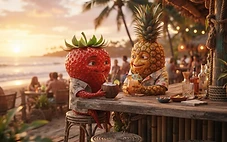
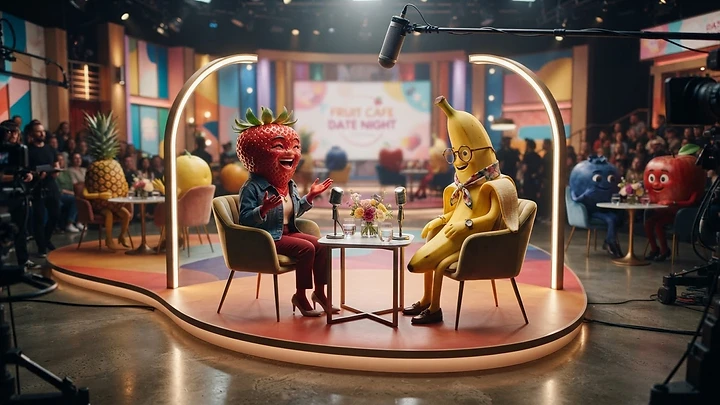
Fruit Love Island emerged as a bizarre AI-animated experiment that quickly escalated into the most addictive and perplexing content on social media. The premise is straightforward: anthropomorphized fruits—such as strawberries and bananas—interact in a setting that blatantly parodies reality dating shows, specifically the 'Love Island' franchise. Produced by ai.cinema021, the project has racked up staggering metrics, including 92 million reported views on its official site. However, the data surrounding its longevity remains murky; while Wikipedia cites 28 episodes, the official portal lists only 19, illustrating how the volatility of platform guidelines can easily erase the digital footprint of viral pop culture trends.
Why it happened: The triumph of automation
The meteoric rise of Fruit Love Island is a direct result of drastically reduced production costs. By leveraging generative AI models, the production team bypassed the need for traditional animation crews, enabling the creation of content at an industrial scale. This exponential output saturated the algorithm, solidifying what industry experts label as 'AI slop'—low-effort, high-virality entertainment. The ability to churn out daily episodes kept audiences captive, turning consumption into a form of digital 'brainrot,' where technical quality is sacrificed for the sake of immediate retention.
What has changed in entertainment
The rise of these automated soap operas signals a profound shift in entertainment consumption. Younger generations have seemingly normalized the consumption of surreal, machine-made content, even when it features uncanny visual artifacts. In Brazil, this trend manifested as the 'Novela das Frutas,' successfully adapted by major brands like iFood and Burger King. Corporate participation proves that even when dismissed as 'slop,' the format is a potent tool for engagement, with the season finale hitting a remarkable 38.6 million concurrent viewers.
The global impact
Globally, the Fruit Love Island phenomenon has forced platforms like TikTok to tighten their moderation policies. The proliferation of fake accounts and the spread of harmful stereotypes, as highlighted by The Straits Times, have placed AI-generated content under regulatory scrutiny. Furthermore, legal uncertainty looms over the project; its deliberate resemblance to the 'Love Island' brand owned by ITV Studios raises significant copyright concerns. As of now, the lack of a clear legal challenge keeps the precedent in a legal limbo that is being closely monitored by both film studios and digital regulators.
Future trends
The future points toward the segmentation of 'AI-generated soap operas' across diverse niches and languages. Brand integration within automated narratives will become more refined, evolving from basic merchandising to AI-scripted product placement. The enhancement of AI-detection algorithms will represent the next technological frontier, attempting to balance creative freedom with the transparency demanded by the digital ecosystem.
Emerging opportunities
For creators and agencies, Fruit Love Island serves as a low-cost blueprint for viral reach. The short-form soap opera structure allows brands to test campaigns with minimal budgets and high potential for social sharing. The primary challenge, however, lies in monetization. Because 'slop' is often viewed unfavorably by traditional advertisers due to the low quality of the inventory, the sector must mature toward direct partnership models that do not rely solely on unstable organic traffic.
The risks ahead
In the short term, the greatest risk is the degradation of the online content ecosystem, where AI saturation makes it increasingly difficult for legitimate human-made productions to gain visibility. Over the medium term, the persistence of this format could lead to cognitive fatigue among users and severe sanctions for intellectual property infringement if traditional studios decide to aggressively protect their brands against AI-generated parodies.
Leia também