
Buying Off-Plan Property in 2026: Is It Still Worth It?
Is buying off-plan still a smart investment in 2026? We break down market trends, inflation risks, and the new requirements for real estate success.
Nivagoo
Listen to this article
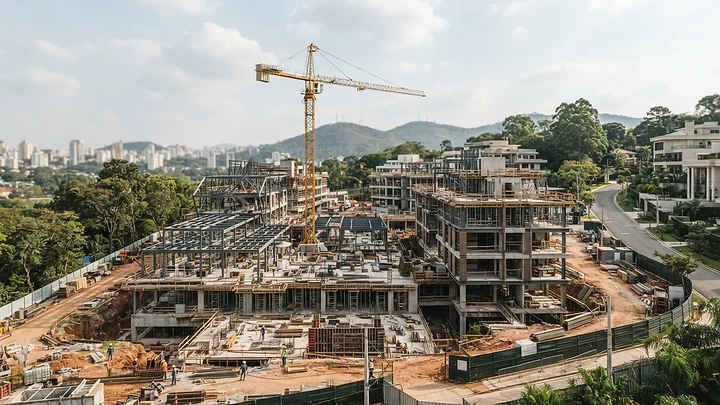
Buying an off-plan property in 2026 has evolved into a sophisticated financial strategy, balancing significant appreciation potential against heightened operational and financial risks. In a market where the shortage of completed units continues to drive prices upward, off-plan investment remains a focal point, but it now demands a technical analysis that goes far beyond simple location or initial price tags.
Market Overview: The 2026 Landscape
The real estate market in 2026 has solidified off-plan properties as highly complex financial assets. According to Idealista — Demand for off-plan housing now surpasses interest in completed properties, the preference for assets under construction is driven by a chronic shortage of ready-to-move-in inventory and the investor's desire for an inflation hedge. Buyers and investors have shifted away from relying solely on developer marketing, now demanding total transparency regarding the financial health of the companies involved and the technical execution of the project.
Why Demand for Off-Plan Assets Has Surged
The surge in interest for off-plan real estate in 2026 is a direct result of an economic environment characterized by persistent high interest rates, where investors hunt for tangible assets to preserve wealth. Data from Portas (Loft) — Macroeconomic trends on interest rates, default rates, and market behavior in 2026 suggests that the relationship between benchmark interest rates and credit supply has redefined the buyer profile: those with liquid capital to invest in the pre-construction phase secure better pricing than they would find in the secondary market, which is currently inflated by the scarcity of new launches.
Changes in the Purchasing Decision Process
The buyer profile has shifted from an enthusiastic amateur to a technical expert. Today, rigorous legal analysis via Mariah Seemann Law — The importance of title deeds and registration reality beyond the contract is a standard safety requirement. Moreover, as revealed by Brain Strategic Intelligence — Climate risk and the devaluation of properties, 40% of buyers now consider climate risk a deal-breaking factor, forcing developers to rethink location selection and structural resilience.
The Global Impact of Climate Resilience
The global real estate trend points toward sharp segmentation: properties lacking sustainability certifications or situated in high-risk climate zones are facing accelerated depreciation. Modern technology, including BIM software and AI-driven construction management, is being leveraged by major developers to minimize delays and ensure project delivery stays on schedule, mitigating the risk of prolonged exposure to construction inflation as noted by Bona Vita — The impact of construction cost indices on installments and legal risks.
Future Trends and the Luxury Market
The future of the market favors boutique units with a high degree of customization. As outlined by Its Houses — Investment security guide: luxury property appreciation, luxury units between 120m² and 160m² have a 35% faster absorption rate than larger properties exceeding 180m², confirming that floor plan efficiency is the new benchmark for liquidity.
Opportunities in Off-Plan Investing Buying off-plan is worth it for those targeting 20% to 30% appreciation who possess significant financial resilience. The real opportunity lies in pre-launch phases with developers who utilize legal "patrimônio de afetação" (asset segregation), ensuring that the buyer's capital is legally protected from the developer's corporate risks.
Risks of Buying Off-Plan
The primary threat remains the gap between construction inflation (INCC) and the buyer's income, along with the possibility of credit rejection upon project completion. Current contract rescission laws have made walking away from a deal financially punitive, necessitating extreme caution.
Pros and Cons - Pros: Potential for high capital appreciation, customization options, and legal security through asset segregation. - Cons: Exposure to construction inflation volatility, risk of construction delays, and long-term capital lock-up.