AutoWarCom: The Pentagon’s New Command for Autonomous Warfare
The Pentagon has launched AutoWarCom, a four-star command dedicated to integrating drones and AI to ensure global military superiority.
Nivagoo
Listen to this article
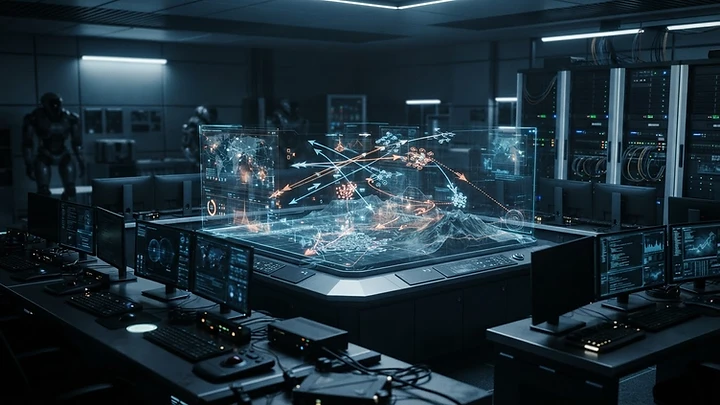
In a move that fundamentally reshapes the defense architecture of the United States, Secretary of Defense Pete Hegseth announced the establishment of AutoWarCom (Autonomous Warfare Command) in September 2026. Unveiled during the 'State of the Force' event in Quantico, this announcement represents a historic shift: it is the first unified command created by the Pentagon since the U.S. Space Command was stood up in 2019. AutoWarCom serves as the definitive response to the urgent need for scaling autonomous and robotic systems, centralizing capabilities that were previously fragmented across various military branches.
The Dawn of Autonomous Warfare
AutoWarCom is designed to act as the central nervous system for integrating drone swarms and AI-driven platforms. Led by a four-star officer, the command does more than just oversee technology; it consolidates procurement strategies. This decision reflects the decline of the traditional model—reliant on massive, expensive platforms—in favor of the high-impact, low-cost effectiveness seen in modern conflicts. The priority is now precision, scalability, and leveraging technology as a primary force multiplier.
The Strategic Race for Technological Dominance
The creation of this command was fueled by intense strategic competition, particularly with China. The Replicator initiative, which acted as a pilot program, proved that military innovation requires a permanent institutional pillar. The Pentagon recognized that bureaucratic friction was the primary bottleneck. By stripping away management layers, this new structure accelerates development, enabling defense technology to match the rapid pace of the private sector.
Structural Changes in Command
A major concern during the planning phase was the potential for overlapping functions with the 11 existing combatant commands. AutoWarCom will function as a 'functional integrator,' providing the necessary AI and robotics infrastructure without undermining the authority of geographical commands. The division of labor is clear: regional commands define operational objectives, while AutoWarCom delivers the autonomous technical capabilities required to achieve them.
Global Impact and New Standards
The establishment of this command sets a new global benchmark. By elevating autonomous warfare to the status of a strategic command, the U.S. is compelling allies and rivals alike to overhaul their military doctrines. This transition signals to the world that the future of the battlefield will be dictated by algorithms and AI agents rather than solely by the physical presence of personnel.
Future Trends: Swarms and AI
The future points toward the intensive use of automated 'kill chains,' where drone swarm management is executed in real-time. The integration of Large Language Models (LLMs) and deep learning systems will ensure that AutoWarCom can process battlefield data at speeds inconceivable for humans. However, rules of engagement remain under intense scrutiny, with ongoing debates regarding the necessity of human 'in-the-loop' decision-making for lethal actions.
Opportunities for the Defense Ecosystem
Tech firms that demonstrate reliability in harsh, contested environments will find massive opportunities. The focus is shifting toward a 'dual-use' model, where AI and robotics startups can integrate into defense contracts without sacrificing commercial agility. The demand for mass-produced, low-cost drones is the largest market opportunity created by this new structural shift.
Risks and Systemic Failures
One cannot ignore the risk of unintended escalation. The Pentagon is still navigating how this command will handle algorithmic failures in active combat. Autonomous decision-making presents significant ethical challenges, necessitating systems that are not only efficient but also highly resilient against perceptual errors that could lead to catastrophic collateral damage.