Autonomous Robots: The New Era of Tech-Driven Warfare
Autonomous robotics are shifting from labs to the battlefield. Discover how AI-powered systems are redefining military strategy and global security.
Nivagoo
Listen to this article
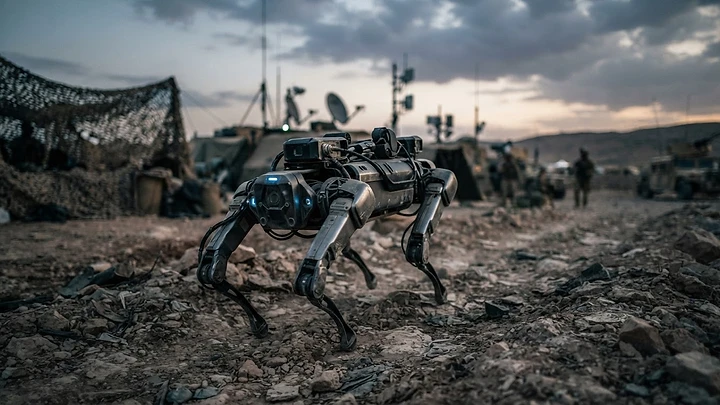
Autonomous robotics are breaking out of industrial labs and warehouses to become the epicenter of a battlefield revolution. What were once simple remotely-controlled systems have evolved into sophisticated machines capable of identifying targets and making tactical decisions with minimal human intervention, all powered by edge AI.
The Technological Shift
The current landscape is defined by the migration of civilian technologies into the defense sector. According to Mordor Intelligence, the military robotics market is poised for significant growth as armed forces prioritize modernization. The core shift lies in the transition from teleoperation to decision-making autonomy, where algorithms process sensor data in milliseconds, far outpacing human reaction times.
The Ukrainian Laboratory
The ongoing conflict in Ukraine acts as a primary accelerator for this tech. As reported by SWI swissinfo. ch, the extensive use of drones has not only changed reconnaissance tactics but has also transformed real-world combat data into vital training sets for new generations of AI models.
This drive for tactical superiority has forced the integration of civilian tech startups into the traditional military-industrial complex.
Technical Autonomy and Decision Levels Military effectiveness now relies on real-time data processing.
Autonomy can be classified into five technical levels: - Level 1: Full remote control operation. - Level 2: Systems with basic stabilization or navigation assistance. - Level 3: Task-specific autonomy (such as pre-planned flight paths) with constant human oversight.
- Level 4: High autonomy in dynamic environments, where the machine selects routes and sensors, requiring human authorization only for engagement. - Level 5: Fully autonomous systems capable of executing complex missions without human communication—a topic of intense ethical debate.
Global Impact: Governance and Accountability The rapid adoption of autonomous systems creates a legal vacuum.
The lack of clear international protocols regarding liability for lethal autonomous system failures creates a grey zone. As noted by the Brazilian Army Blog, the strategic competition between the US, China, and Russia is reshaping alliances like NATO, while pressure for international regulation mounts to prevent an unchecked arms race.
Future Trends: Swarms and Humanoids
The future points toward the deployment of drone swarms and integrated humanoid systems. While conventional drones are effective for surveillance, autonomous ground robotics seek to replicate human mobility in urban environments, though real-world data confirming their superiority over established aerial systems remains limited.
Procurement Opportunities
The US Navy has led the way in forming consortia to bring non-traditional defense firms into the fold, as detailed by DefesaNet. This 'accelerated acquisition' strategy allows dual-use innovations to reach the battlefield in record time, decentralizing military technology production.
Risks: Ethics and Political Judgment
The central debate, explored by Jacobin, lies in replacing political and moral judgment with automated algorithms. The concern is that an 'automation fetish' may dehumanize conflict, lowering the political cost of war for nations that over-rely on machines and edge AI for life-or-death missions.
Leia também