Amazon Climate Summit: What to Expect from COP30 in Belém
As Belém prepares to host COP30, the Amazon takes center stage in global climate diplomacy. Discover the key challenges and goals for the biome's future.
Nivagoo
Listen to this article
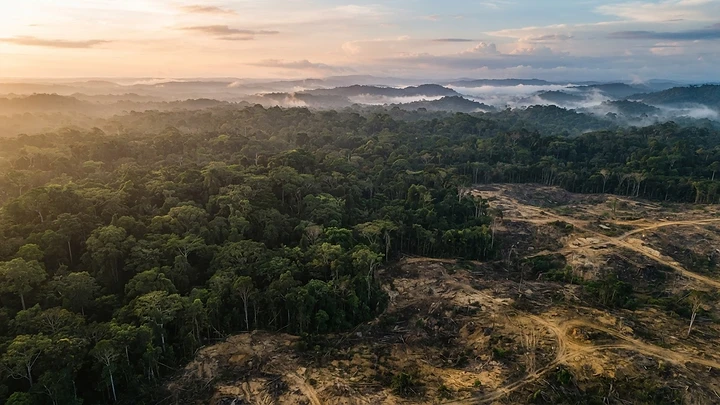
The Amazon Climate Summit, which will culminate in COP30 in Belém, positions the biome as the central axis of global climate diplomacy. As NASA Earthdata scientists confirm critical feedback loops between vegetation and climate, the urgency of setting robust 2035 climate goals has become undeniable. This conference represents more than just a political gathering; it is a viability test for the survival of the ecosystem and the stability of the global economy.
What has happened Recently, the Amazon has shifted from a peripheral environmental topic to the epicenter of climate discussions. Data from Deutsche Welle (DW) reveals that the region's dry season has extended by four to five weeks, accompanied by a drastic 20% to 30% reduction in precipitation. This is not a distant forecast, but a present reality already impacting the southern Amazon, where signs of irreversible change are detected from the Atlantic to Bolivia.
Why it happened Forest degradation is a chain reaction phenomenon.
As analyzed by Niboe, deforestation reduces the forest's evapotranspiration capacity, which leads to decreased rainfall and heightened water stress. This stress hinders tree growth, reducing carbon absorption and accelerating global warming. According to Conservation International, this negative feedback loop threatens the goals of the Paris Agreement, forcing the international community to treat Amazonian preservation as a strategic global asset.
What has changed
The political narrative has undergone a fundamental shift: we have moved from the phase of 'abstract preservation' promises to the urgent need for climate adaptation and finance. Coverage from CBN indicates that the focus is now on operationalizing more ambitious Nationally Determined Contributions (NDCs) for 2035. The major question nations must address is how to ensure the economic sovereignty of developing countries while implementing these goals, preventing forest protection from acting as a brake on social development.
What is the global impact Global climate stability depends on keeping the forest standing.
The collapse of the Amazon's rainfall regime impacts the South American agribusiness sector and disrupts global supply chains. Pressure for supply chain transparency has become the norm, and failure to meet 2035 targets may trigger a reassessment of the cost of capital for nations that fail to demonstrate real commitment to global sustainability.
What future trends can be inferred We anticipate the consolidation of more rigorous carbon markets, where preservation integrity is audited via satellite technology. Corporate climate activism is pushing firms toward full traceability, while financial mechanisms like the Tropical Forest Finance Facility (TFFF) seek to balance the ledger between those who preserve and those who finance. Real-time forest monitoring will become the sovereign technology of this new market.
What opportunities are emerging
The energy transition and the bioeconomy are emerging as pillars for Brazil. A historic window exists to attract investment in restoration and monitoring technologies. If funding is correctly operationalized, the summit could transform the region into a model of sustainable development, bridging the gap between environmental conservation and economic prosperity.
What risks are emerging The greatest danger is the 'tipping point'.
LIRA/IPÊ notes that without concrete actions by 2050, the forest could undergo unexpected transitions that are difficult to reverse. Furthermore, there is a real risk of forced migration due to extreme weather events and potential political instability if Brazilian climate diplomacy fails to convert international agreements into effective financing results and clear sanctions for failing to meet NDCs.