AI in Defense: How Technology Revolutionizes Military Security
Artificial intelligence is revolutionizing the detection of military data leaks, strengthening national cybersecurity against sophisticated digital threats.
Nivagoo
Listen to this article
The Rise of AI in Detecting Military Data Leaks
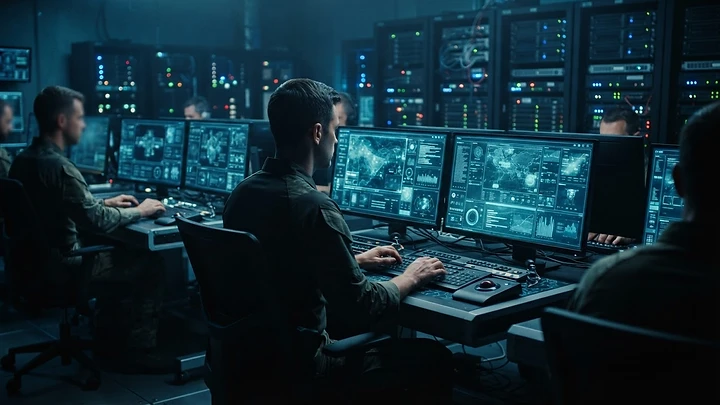
Artificial Intelligence is fundamentally shifting how military organizations detect data breaches, becoming the cornerstone for protecting classified information in an era of escalating global digital threats. With the massive volume of data generated daily, traditional monitoring methods have become obsolete. This shift is compelling nations to adopt predictive systems capable of identifying anomalous patterns before severe damage occurs.
The Role of AI in National Security
Governmental cybersecurity is facing unprecedented challenges. The implementation of machine learning algorithms allows defense infrastructures to analyze network traffic in real-time with a level of precision that remains unattainable for human operators alone. AI-driven leak detection monitors access patterns, identifies potential data exfiltration attempts, and neutralizes automated attack vectors. By processing vast amounts of telemetry, governments can now pinpoint cyber-espionage attempts even before they are fully executed.
Defense Technologies Against Military Data Leaks
Beyond perimeter protection, the integration of AI involves several sophisticated methodologies:
- Behavioral Analysis: Identifying deviations in user or internal system behavior to flag malicious intent.
- Adaptive Encryption: Systems that dynamically adjust security protocols based on the sensitivity of the transmitted data.
- Incident Response: Automated isolation of compromised network segments, significantly minimizing the impact of large-scale leaks.
These defense technologies do not merely react to failures; they act proactively. By utilizing predictive analytics, military agencies can anticipate vulnerabilities in legacy software and patch security gaps before they are exploited by state-sponsored or independent malicious actors.
Ethical and Operational Challenges
While the efficacy of these tools is undeniable, their adoption raises critical questions regarding human control and transparency. Relying on algorithms for national security decisions necessitates rigorous audits and a robust 'human-in-the-loop' framework. This ensures that automated actions remain aligned with established political and ethical guidelines. The technological arms race demands that global powers strike a delicate balance between innovation and responsibility, ensuring that AI serves as a protective shield rather than an additional risk vector.
The Future of Cyber Defense
As the leakage of military data evolves into a potent geopolitical tool, the development of AI-powered detection will determine the global balance of power. Integrating autonomous systems into defense networks promises to reduce incident response times from days to mere milliseconds. In the future, digital sovereignty will be maintained by algorithms that learn and evolve as rapidly as the threats they are designed to combat, solidifying AI as the most vital component of the modern military arsenal.
Leia também